
Last Updated: October 30, 2026
Quick Summary
House training older rescue dog means replacing an existing bathroom routine, not building one from scratch. Start with a vet check to rule out medical causes, then set a fixed feeding schedule, use one designated potty area, and reward outdoor elimination within seconds. Most adult rescues show real progress in two to four weeks with consistency.
- An adult dog has already learned a bathroom routine, so your job is to replace it.
- Watch for signs of a urinary tract infection in dogs, such as straining or frequent small urinations.
- Reward every outdoor success for the first two weeks, using small, soft treats so you can reward fast.
- Most dogs need to eliminate within 15 to 30 minutes of eating.
- Clean accidents with an enzyme cleaner, not just soap, and block access to recurring spots for two weeks.
Table of Contents
- Why House Training an Older Rescue Dog Is Different
- Rule Out Medical Causes First: Signs of a Urinary Tract Infection in Dogs
- How to Potty-Train an Adult Dog: A Step-by-Step Plan
- Building an Adult Dog Potty-Training Schedule
- Crate Training an Adult Rescue Dog Without Setbacks
- Troubleshooting Accidents: Supervision, Cleanup, and Setbacks
- Get the Step-by-Step Plan for Your Rescue Dog
- Frequently Asked Questions
Why House Training an Older Rescue Dog Is Different
House training older rescue dog is not the same job as training a puppy. An adult dog arrives with habits, fears, and a history you did not see, and some of those habits formed in a kennel, a shelter, or a home that never taught the dog where to go.
The core difference comes down to one thing: an adult dog has already learned a bathroom routine. Your job is to replace it, not build one from scratch.
That changes the timeline, the tools, and the tone. You are retraining, not starting fresh.
What a Rescue Dog's Past Can Mean for Potty Habits
A dog from a kennel background often learned to eliminate on concrete or bedding because there was no other option. That habit sticks. So does anxiety from a move, new people, and unfamiliar smells.
A common mistake is reading these accidents as defiance. They are almost always confusion or stress.
- Dogs from shelters may never have been walked on a leash
- A dog may have been left alone for long stretches
- New-home stress can trigger loose stools and more frequent urges
- Some dogs hide accidents out of fear of punishment
Patience here is not softness. It is the fastest route to results.
Rule Out Medical Causes First: Signs of a Urinary Tract Infection in Dogs
Before you change a single thing about training, get a vet check. Sudden or persistent accidents in an adult dog can point to a medical problem, and no training plan fixes a health issue.
Watch for these signs of a urinary tract infection in dogs:
- Peeing small amounts very often
- Straining or crying while urinating
- Blood in the urine or a strong smell
- Accidents in a dog that was previously reliable
Older dogs also face age-related issues like reduced bladder control and joint pain that makes getting outside harder. The American Veterinary Medical Association's pet health guidance is a solid starting point for understanding what warrants a vet visit.
If your vet clears the dog, you can train with confidence. If not, you treat first and train second.
How to Potty-Train an Adult Dog: A Step-by-Step Plan
To potty-train an adult dog, treat the first two weeks like a reset. You control the schedule, the access, and the rewards. Freedom comes later, once the habit is set.
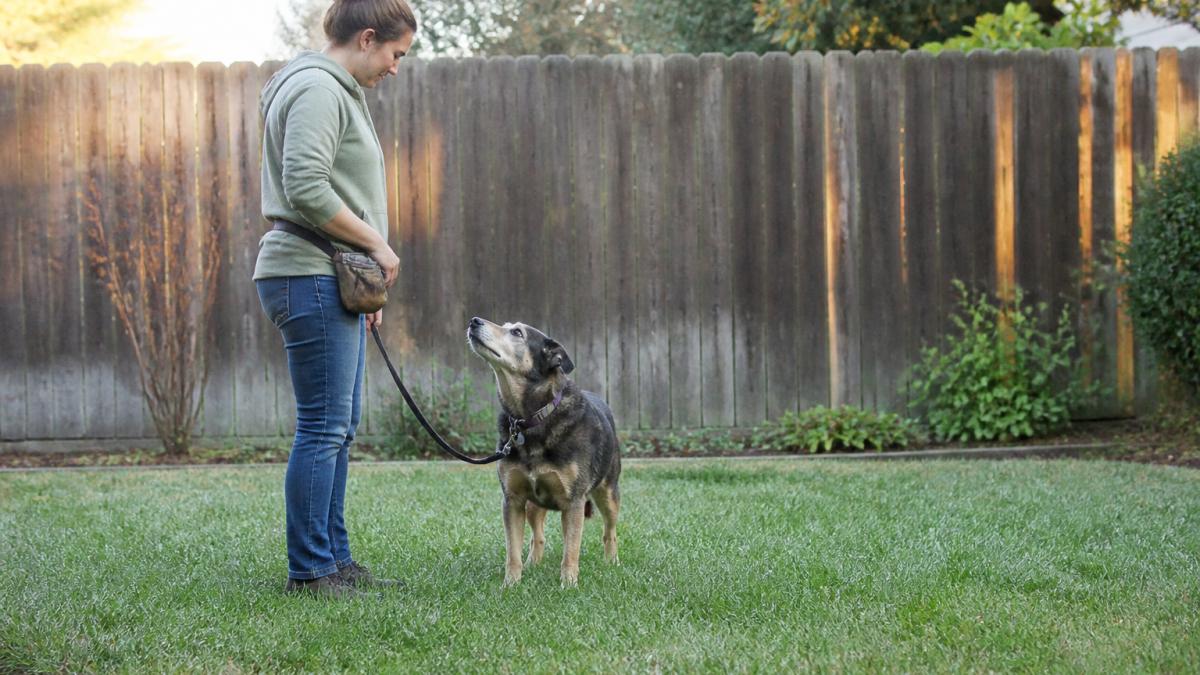
Here is the sequence we recommend:
- Book the vet check and rule out medical causes
- Pick one designated potty area and always use it
- Set a fixed feeding schedule, then time potty breaks around it
- Take the dog outside first thing, after meals, after naps, and before bed
- Go out on a leash, even in a fenced yard, so you can reward on the spot
- Reward outdoor elimination within seconds, every single time
- Supervise indoors or use a crate or gate when you cannot watch
- Clean every accident with an enzyme cleaner, not just soap
Most adult rescues show real progress in two to four weeks with consistency. Some take longer. That is normal.
Step 1: Set Up a Designated Potty Area and Supplies
Choose one spot outside and take the dog there every time. The same patch of grass, the same route, the same command. Dogs learn fast when the picture never changes.
Gather your supplies before you start:
- A 6-foot leash for potty trips
- High-value treats kept by the door
- An enzyme cleaner for accidents
- A crate or baby gate for supervision
A common mistake is letting the dog wander the whole yard. That turns potty time into sniff-and-explore time. Keep it boring and focused.
Step 2: Reward Outdoor Elimination Immediately
The reward has to land while the dog is still finishing.
Say a quiet potty cue as the dog starts, then praise and treat the second it happens. Keep your voice calm, not excited, so you do not interrupt.
- Reward every outdoor success for the first two weeks
- Use small, soft treats so you can reward fast
- Add praise and a calm "good potty" cue
- Phase treats down slowly, not abruptly
The thing nobody tells you about this step: timing beats treat quality. A plain treat delivered in one second works better than a fancy one delivered in five.
Building an Adult Dog Potty-Training Schedule
An adult dog potty-training schedule should be built around meals, not the clock alone. Feed at the same times each day and you can predict when the dog needs to go.
Start with this framework and adjust to your dog:
| Time | Action | Why It Matters |
|---|---|---|
| 7:00 a.m. | Out to potty, then breakfast | Empty bladder before food |
| 7:30 a.m. | Second potty trip | Digestion starts fast |
| Midday | Potty break or walk | Prevents long holds |
| 5:30 p.m. | Dinner | Fixed feeding time |
| 6:00 p.m. | Potty trip | Post-meal urge |
| Before bed | Final potty trip | Cuts overnight accidents |
Limit water access in the hour before bed, but never restrict water during the day.
Track every meal, trip, and accident for the first two weeks. Patterns show up fast, and patterns tell you where to tighten the schedule.
Crate Training an Adult Rescue Dog Without Setbacks
Crate training an adult rescue dog works best when the crate is a calm resting spot, not a punishment.
Introduce the crate slowly. Leave the door open, toss treats inside, and feed meals near it. Build up to short, supervised closed-door sessions.
- Never use the crate to punish
- Keep sessions short at first
- Always potty the dog before crating
- Use a baby gate to limit space when you are home
Watch out: crating a dog for too long between potty trips backfires. A dog that cannot hold it will soil the crate, and that teaches the opposite of what you want.
Troubleshooting Accidents: Supervision, Cleanup, and Setbacks
Repeated accidents are data, not defiance. Before you tighten the schedule, identify the pattern. A simple log, meals, water, outings, accidents, and where they happened, turns guesswork into a plan. Track for seven days, then match the pattern below.
Pattern 1: Accidents While You Are Away
If the dog only soils when alone, the issue is usually confinement duration or separation stress, not house training older rescue dog. Shorten alone time, use a camera to see whether the dog is anxious (pacing, drooling, destructive chewing) or simply has too much space. A dog that panics when alone needs a behavior plan, not a stricter potty schedule.
Pattern 2: Overnight Accidents
Overnight accidents in an older dog often point to reduced bladder control or a medical issue. Rule out a urinary tract infection first. If the vet clears the dog, move the last water access earlier (not restricted entirely), take a final potty trip right before bed, and consider a mid-night trip for dogs with mobility limits. A waterproof crate pad or belly band can manage the mess while you retrain, but it is a bridge, not a solution.
Pattern 3: Accidents Right After Meals
This is a timing problem. Most dogs need to eliminate within 15-30 minutes of eating. If accidents happen after meals, you are likely waiting too long. Take the dog out immediately after eating, then again 15 minutes later. If the dog still has accidents, check whether the meal itself is causing loose stools, sudden diet changes in rescue dogs are a common trigger.
Pattern 4: Accidents in One Recurring Location
A dog that keeps returning to the same spot is following scent, not habit. Regular soap does not remove the enzymes that signal "bathroom" to a dog. Clean that area with an enzyme cleaner, then block access to it for two weeks. If the spot is near a door, the dog may be trying to tell you it needs out, watch for subtle signals like sniffing, circling, or staring at the door.
Pattern 5: Accidents After a Setback
Stress, a move, a new person, a change in routine, can undo weeks of progress. Go back to the two-week reset: fixed feeding times, frequent leashed trips, constant supervision, and immediate rewards. Do not punish. A dog that is already stressed will only hide accidents, making the problem harder to solve.
When to Call the Vet Again
If accidents persist despite a consistent plan, or if you see straining, blood, frequent small urinations, or a sudden change in a previously reliable dog, return to the vet. Older dogs can develop incontinence, arthritis that makes posturing painful, or cognitive dysfunction that disrupts routine. These are medical issues, not training failures.
Get the Step-by-Step Plan for Your Rescue Dog
House training an older rescue dog takes structure, patience, and a plan you can follow on the hard days. That is exactly what we build at RAK GROUP.
Our 14 Day Puppy Potty Training Bootcamp gives you a day-by-day plan, potty schedules you can follow, and clear steps for what to do when accidents happen.

For the full set, the Happy Dog Bundle includes the 14 Day Puppy Potty Training Bootcamp alongside The Calm Dog Guide and Puppy's First 30 Days, with bundle savings of $59.99 instead of $74.97 when bought separately.

Get started and give your rescue dog the calm, consistent routine it deserves.
Frequently Asked Questions
How long does it take to house-train an older rescue dog?
Most adult rescues need two to eight weeks of consistent routine before accidents drop off, though dogs with long kennel backgrounds or high stress can take longer. Progress depends on how quickly the dog settles in, whether a medical issue is ruled out, and how strictly you follow a potty schedule. Track outdoor successes and accidents daily so you can see the trend instead of judging by one bad day.
Should I crate-train an older rescue dog?
Yes, if the dog is comfortable in a crate. Crate training an adult rescue dog gives the dog a quiet space and limits indoor elimination while you build a schedule. Introduce the crate slowly with treats and short sessions, and never use it as punishment. If the dog panics or was previously crated for long hours, use a baby gate and a small safe room instead.
Why is my newly adopted dog having accidents in the house?
Stress, an unfamiliar routine, and a new environment are common reasons a rescue dog has accidents in the first weeks. Rule out medical causes like a urinary tract infection, then tighten the schedule: frequent outdoor trips, supervision indoors, and immediate rewards for outdoor elimination. Clean accidents with an enzyme cleaner so lingering odor does not draw the dog back to the same spot.
How often should I take an older dog outside to potty?
Start with trips every two to three hours during the day, plus first thing in the morning, after meals, after naps, and before bed. Senior dogs and dogs with mobility limits may need more frequent, shorter trips and a potty area close to the door. Once you see a week of no accidents, stretch the interval by 30 minutes at a time.
The hardest part of house training an older rescue dog is not the training itself. It is staying patient when progress feels slow. Start with the vet check, lock in a schedule, reward every outdoor success, and tighten supervision before you loosen it. RAK GROUP makes that easier with clear, step-by-step digital guides you can follow one day at a time. Get started with RAK GROUP and turn a rocky start into a reliable routine.
